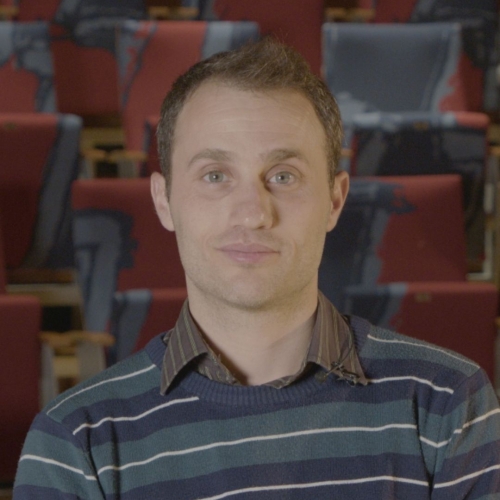
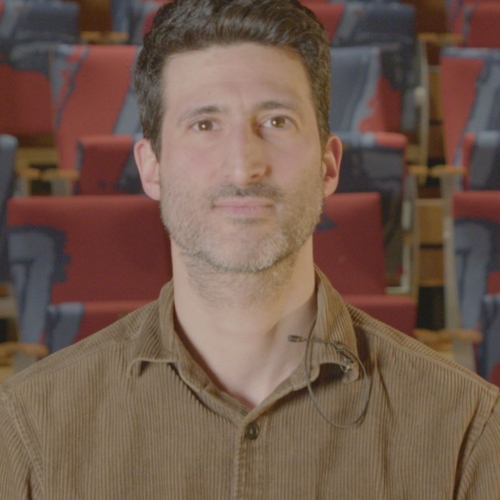
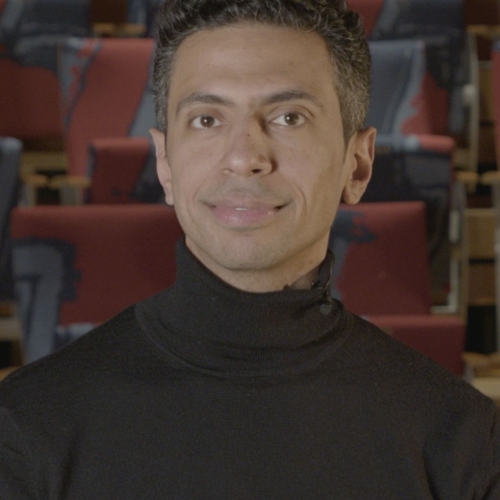
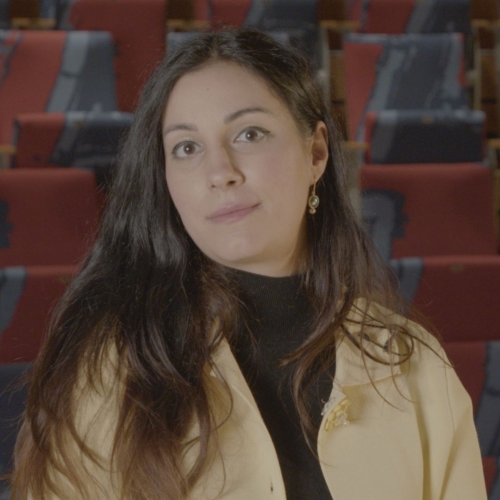
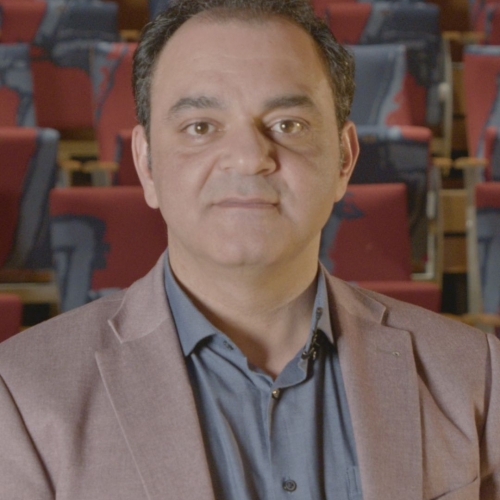
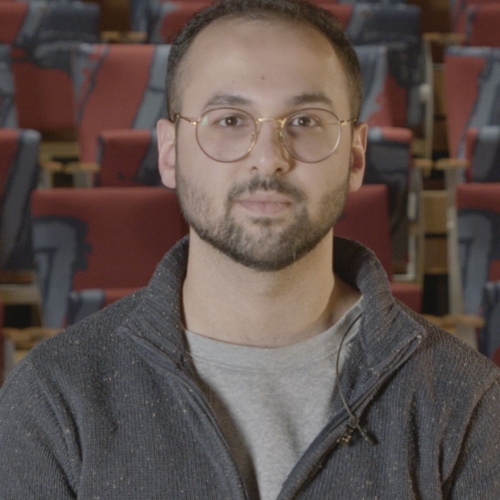
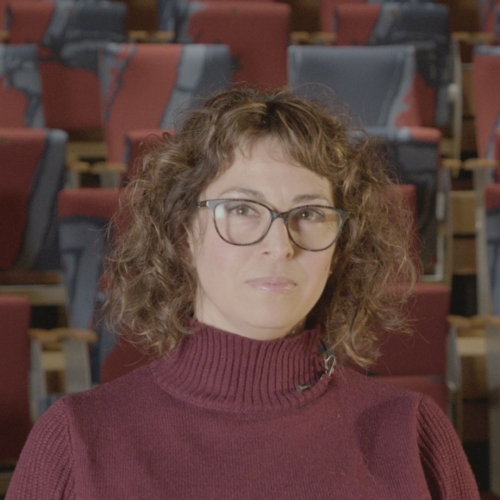
In 2025, the West-Eastern Divan Orchestra elected seven of their musicians to form a Committee, to take on a more direct role in the project, beyond the music: as representatives of the orchestra, and as active participants in the questions that shape its future. It is a structure through which the questions that have been present in this orchestra since 1999 can be worked on more directly and with more continuity than before.
current members
Alon
Trombone, 2013
Jussef
Clarinet, 2009
Mohamed
Trombone, 2013
Muriel
Viola, 2016
Nassib
Cello, 2000
Samir
Violin, 2017
Tal
Viola, 2004
In February 2026, the Committee gathered at the Pierre Boulez Saal of the Barenboim-Said Akademie in Berlin. The clips that follow are moments from their conversation.
In their own words
This orchestra brings together musicians of different generations, some of them active since its early years. The decision to take on a more direct role, and to form a Committee, came from musicians who know what being part of this project involves, and believe it is worth their participation.
From the beginning, this project has rested on bringing musicians together, and on the work of listening across very different experiences and narratives. The Committee shares the position that this connection depends on engaging directly with the most difficult subjects between the musicians, rather than working around them.
To be part of this orchestra is, for many of its musicians, complex and at times difficult. The Committee understands that not as the dialogue failing, but as part of what an honest one asks.
Not all of these experiences are symmetrical. The musicians in this orchestra hold different relationships to where they live, and to home. For some, returning to the place their family is from is not currently possible. For those who do live in the region, what follows is a personal account of how life between tours and life within the orchestra sit alongside each other.
Music and intellectual life were never separate for either Maestro Daniel Barenboim or Palestinian literary scholar Edward W. Said. The orchestra and projects that followed it, like the Barenboim-Said Akademie in Berlin, inherited that and continue to work toward what it asks of those who carry it.
Writing is an additional form of accountability. In 2025, musicians across the orchestra wrote a set of Principles together, a shared reference for how, starting with the Committee, they work and speak with one another.
The Principles
The Principles of the West-Eastern Divan Orchestra describe what it commits to. Drafted by musicians of the orchestra in 2025, they name the political and ethical realities within which this project takes place, and the values it works toward. They are not offered as solutions but as an ethical compass: grounded in nonviolence, in the power of listening, and in the belief that every human life holds equal worth, complexity, and dignity.
This website uses cookies, which may include third party cookies, to improve your browsing experience and deliver personalized marketing content. To find out more, including how to disable the cookies, read our Cookie Policy. By continuing to browse this website, you agree to our use of cookies.Got it!